
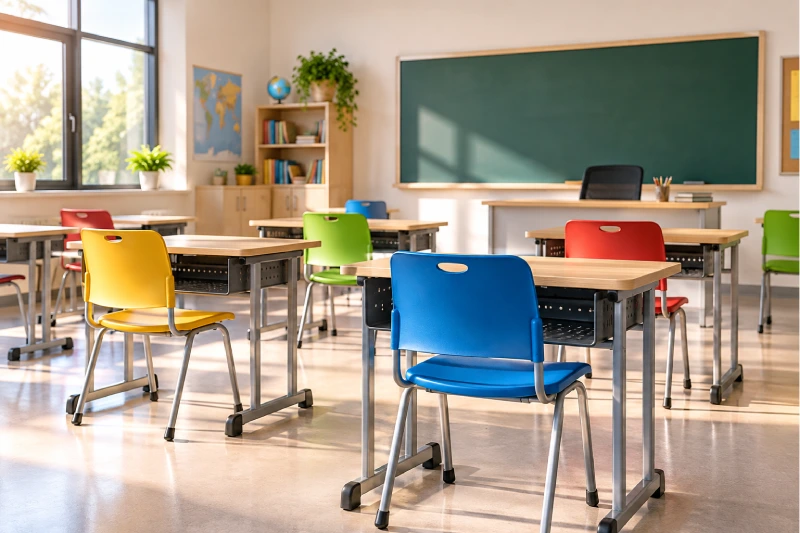
School furniture is exposed to some of the most demanding conditions in an educational environment. Desks, benches, chairs, teacher tables, laboratory furniture and storage units are used every day, often for several hours at a time. Students move, write, clean and interact with furniture continuously, while classrooms may accommodate multiple batches of students throughout the day.
This makes school furniture maintenance an important part of managing an educational institution. The lifespan of classroom furniture does not depend only on the material used. Construction quality, surface treatment, daily usage, cleaning practices, installation and timely repairs all influence how long furniture remains safe, comfortable and functional.
So, how long does school furniture last? There is no single number that applies to every product. Well-designed institutional furniture made from suitable materials can provide years of regular service, while poorly constructed furniture may require repairs or replacement much sooner. Understanding the materials and maintenance requirements can help schools make better long-term purchasing decisions.
What Determines Classroom Furniture Durability?
Classroom furniture durability depends on several factors working together. The frame needs to withstand repeated loading and movement, while the tabletop and seating surfaces need to resist scratches, impact and everyday wear.
The quality of fasteners, welding, edge finishing and surface coating also matters. Even a good material can deteriorate prematurely if the construction is weak or if the furniture is exposed to moisture without adequate protection.
At Vardhaman Trading, classroom benches and desks are available with features such as powder-coated mild steel frames, pre-laminated particle board, high-density plywood seating panels, edge-banded surfaces and scratch-resistant laminate finishes. These specifications are intended for the demanding requirements of schools, colleges, coaching institutes and training centres.
1. Powder-Coated Mild Steel Frames
The frame is one of the most important components of school benches and desks because it carries much of the structural load.
A powder coated MS frame provides a durable metal structure with a protective finish. Powder coating helps protect the steel surface from everyday scratches and environmental exposure while providing a clean, uniform appearance.
However, proper maintenance remains important. If the coating is severely scratched and bare metal becomes exposed, moisture can eventually contribute to corrosion. Schools should therefore inspect furniture periodically, particularly around joints, corners, welds and areas that experience frequent impact.
For institutions where furniture is used intensively, selecting a properly fabricated steel frame and maintaining it correctly can help reduce premature replacement and school bench repair requirements.
2. Pre-Laminated Particle Board
Prelaminated particle board is commonly used for classroom furniture because it provides a practical balance between appearance, functionality and cost.
The laminated surface provides a finished appearance and can be easier to clean than unfinished board materials. However, edges and joints require particular attention. If water enters through damaged or poorly protected edges, the underlying board can deteriorate over time.
This is why PVC edge banding is important. Proper edge treatment helps protect exposed edges from everyday impacts and moisture while giving desks and tables a cleaner finish.
For classrooms, cleaning should generally be done with a damp—not excessively wet—cloth, followed by drying where necessary. Standing water should never be allowed to remain on furniture surfaces or edges.
3. 18mm Ply and Plywood Components
Plywood is another material used in institutional furniture where additional strength and structural stability are required. An 18mm ply specification, for example, can provide a substantial panel for applications where the design calls for a stronger board construction.
The actual performance of plywood depends on its grade, bonding quality, surface finish and application. Schools should therefore look beyond thickness alone when comparing products.
Plywood components should be protected from prolonged moisture exposure. Regular inspection of edges, joints and mounting points can help identify problems before they become major repair issues.
4. PVC Edge Banding: A Small Detail That Matters
Furniture edges experience constant contact with students, bags, books and classroom equipment. Poorly finished edges can become chipped, sharp or damaged relatively quickly.
PVC edge banding provides a finished protective edge around board components. It can improve the appearance of the furniture while helping protect the underlying board material.
During routine inspections, school staff should check whether edge bands have become loose or damaged. Addressing these problems early is generally preferable to allowing moisture or repeated impact to reach the underlying board.
5. Seven Tank Treatment and Rust Resistance
For steel furniture, surface preparation is just as important as the final coating. A seven tank treatment is a multi-stage metal-treatment process used by manufacturers to prepare steel surfaces before finishing. The specific process and chemicals used can vary between manufacturers and specifications.
The purpose of such treatment is to clean and prepare the metal surface and improve the performance of subsequent protective coatings. When combined with appropriate powder coating and good fabrication, proper surface treatment can contribute to better rust resistance.
Schools purchasing furniture in bulk should ask suppliers about the frame material, surface preparation, coating specification and quality-control process rather than evaluating the product only on appearance.
How Long Does School Furniture Last?
There is no universal lifespan for school furniture because usage conditions differ considerably between institutions.
A desk used by one student in a controlled classroom environment may experience very different wear from furniture used continuously in a coaching centre, laboratory, hostel or high-footfall institution.
Furniture lifespan is influenced by:
- Quality and thickness of materials
- Steel frame construction
- Surface coating and treatment
- Quality of welding and fasteners
- Edge protection
- Daily usage and student handling
- Classroom cleaning practices
- Moisture and environmental conditions
- Timely repairs and replacement of damaged components
Instead of asking only, “How many years will this furniture last?”, institutions should also ask whether the furniture can be repaired, maintained and supported throughout its service life.
Practical School Furniture Maintenance Checklist
A simple maintenance routine can significantly improve the usability and appearance of classroom furniture.
Inspect Frames Regularly
Check steel frames for loose joints, damaged welds, scratches, bending or early signs of corrosion. Problems should be addressed before they affect structural stability.
Tighten Loose Fasteners
Repeated daily movement can gradually loosen screws, bolts and other fittings. Include fastener inspection as part of periodic classroom maintenance.
Protect Furniture from Excess Moisture
Avoid soaking desks and benches during cleaning. Wipe spills promptly and pay special attention to board edges, joints and metal connections.
Repair Damaged Edges
Lose or damaged PVC edge banding should be repaired promptly. Small edge defects can become larger problems when furniture continues to receive heavy daily use.
Use Appropriate Cleaning Methods
Use cleaning products suitable for the furniture’s specific surface. Avoid abrasive materials that can scratch laminate or coated surfaces.
Don’t Drag Heavy Furniture
Dragging benches, desks and tables repeatedly across floors can place unnecessary stress on frames, joints and feet. Lift or move furniture using appropriate handling methods whenever possible.
Maintain a Repair Log
Schools with hundreds of desks and benches can benefit from maintaining a basic repair record. Recording recurring issues helps facility managers identify furniture that requires refurbishment or replacement.
When Should School Furniture Be Repaired?
Not every damaged desk or bench needs to be replaced.
A loose fastener, damaged edge band, worn-out foot or minor surface damage may be repairable. School bench repair can therefore be an economical way to extend the useful life of classroom furniture when the main frame and structure remain sound.
However, furniture should be replaced when structural damage affects safety, when frames are severely corroded, when surfaces can no longer be properly maintained, or when the product no longer provides the required comfort and functionality.
The decision should always consider student safety first.
Warranty Period and AMC: What Schools Should Check
When purchasing furniture in bulk, schools should not focus only on the product price. Ask about the warranty period, what components are covered, exclusions, service response and availability of replacement parts.
For large campuses, an AMC (Annual Maintenance Contract) or structured post-installation support arrangement may also be worth considering, depending on the supplier and product category.
A reliable institutional furniture partner should be able to provide clear information about product specifications, installation, warranty and after-sales support. Vardhaman Trading highlights post-installation support and maintenance guidance as part of its institutional furniture service.
Why Product Demonstration Matters Before Bulk Purchase
Furniture that looks good in a catalogue may perform differently in an actual classroom. This is particularly important when a school is purchasing hundreds of benches, desks or chairs.
Vardhaman Trading offers a free on-site demonstration, allowing educational institutions to evaluate furniture quality, comfort and suitability before finalising a purchase. Its process includes understanding the institution’s requirements, arranging a live product demonstration, preparing the work order, and managing procurement, customization, delivery and installation.
A physical demonstration also gives school administrators an opportunity to examine frame construction, surface finishing, dimensions, edge treatment and overall stability before committing to a bulk order.
Choosing Furniture for Long-Term Value
The cheapest classroom furniture is not necessarily the most economical choice over its entire service life. A product that requires frequent repairs or early replacement can increase the institution’s total ownership cost.
Instead, schools should evaluate the complete picture: material quality, construction, ergonomics, finish, maintenance requirements, warranty, service support and availability of customized options.
For example, a durable powder-coated steel frame combined with a properly finished tabletop can provide a practical solution for intensive classroom use. Similarly, appropriate edge protection and quality hardware can make a noticeable difference to everyday performance.
Vardhaman Trading has been serving educational institutions since 2002 and provides classroom, laboratory, library, auditorium and other institutional furniture solutions. Its current school furniture offering includes classroom benches and desks designed for regular educational use, with customization, bulk supply and installation available according to institutional requirements.
Final Thoughts
Understanding how long school furniture lasts requires looking beyond the material name. A powder-coated MS frame, prelaminated particle board, plywood panel or PVC edge band can contribute to a durable product, but the overall construction, finish, usage and maintenance routine are equally important.
For schools and colleges, a proactive approach to school furniture maintenance can help identify small problems before they become expensive repairs. Regular inspections, appropriate cleaning, protection from moisture, timely school bench repair, and proper handling can all contribute to longer-lasting classroom furniture.
When purchasing new furniture, evaluate the material specifications, construction quality, warranty period and after-sales support. Most importantly, wherever possible, inspect and test the furniture before placing a large institutional order.
With the right material, construction and maintenance practices, schools can create classroom environments that remain comfortable, safe and functional for years of everyday educational use.
Looking for durable school furniture in Pune? Vardhaman Trading provides classroom benches, desks, laboratory furniture, library furniture and complete institutional furniture solutions with customization, on-site demonstrations, delivery and installation support.