
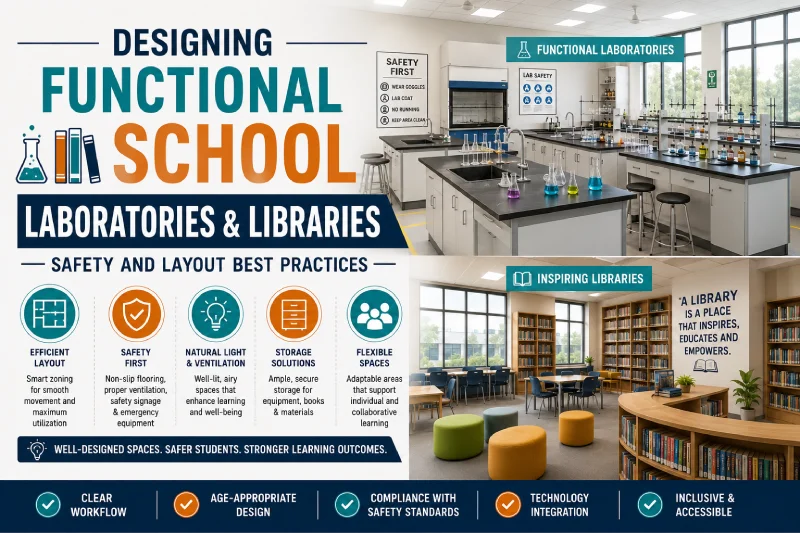
Educational institutions today are expected to provide more than traditional classrooms. Modern schools, colleges, universities, and training centers require specialized learning environments that encourage innovation, practical learning, research, and academic excellence. Among the most important spaces within any institution are laboratories and libraries—two facilities that directly influence student engagement, skill development, and overall educational outcomes.
A well-designed laboratory enables students to apply theoretical concepts through experimentation, while a thoughtfully planned library fosters research, reading habits, and independent learning. However, creating these spaces involves much more than simply purchasing furniture. Institutions must carefully consider safety, durability, workflow, accessibility, and future expansion requirements.
This is why educational organizations increasingly work with experienced laboratory furniture manufacturers in Pune to create functional and future-ready learning environments. From specialized science lab benches and anti-corrosive lab materials to modern school library infrastructure and premium university furniture, every element contributes to the effectiveness of the facility.
This guide explores the essential safety standards, layout principles, and furniture considerations for designing high-performance school laboratories and libraries.
Why Laboratory and Library Design Matters
Laboratories and libraries are among the most frequently used academic spaces outside classrooms. Students, teachers, researchers, and administrative staff rely on these facilities daily.
Poorly designed spaces often result in:
- Limited functionality
- Reduced user comfort
- Safety risks
- Inefficient movement and workflow
- Storage challenges
- Increased maintenance costs
On the other hand, strategically designed facilities provide:
- Better space utilization
- Enhanced learning experiences
- Improved safety standards
- Greater operational efficiency
- Long-term durability
- Future scalability
The foundation of every successful educational institution lies in creating environments that support both learning and productivity.
Designing Safe and Efficient School Laboratories
Laboratories are unique learning environments where students actively engage with scientific concepts through observation, experimentation, and practical application. Because these spaces often involve chemicals, equipment, electrical systems, and delicate instruments, safety must remain a top priority during the planning process.
1. Begin with an Effective Laboratory Layout
Before selecting furniture, institutions should establish a practical laboratory layout that promotes safe movement and efficient workflows.
An ideal laboratory layout should:
- Allow clear circulation paths between workstations
- Prevent overcrowding
- Provide direct access to emergency exits
- Create separate zones for experiments and storage
- Facilitate supervision by teachers and instructors
A thoughtfully planned layout not only improves safety but also enhances the learning experience by minimizing distractions and operational bottlenecks.
Layout Planning Considerations
- Number of students per batch
- Type of laboratory (Physics, Chemistry, Biology, Computer, Engineering)
- Equipment requirements
- Storage needs
- Safety compliance standards
Proper planning during the initial stage can significantly reduce future modifications and operational challenges.
2. Invest in Specialized Science Lab Benches
The laboratory bench serves as the primary workspace where students conduct experiments, analyze samples, and perform practical activities.
Because laboratory benches experience continuous use, they must be designed for durability, stability, and safety.
Features of High-Quality Lab Benches
- Strong structural framework
- Spacious work surfaces
- Chemical-resistant finishes
- Easy maintenance and cleaning
- Ergonomic working height
- Long service life
Specialized science lab benches help institutions create organized workstations that can support various educational activities while maintaining safety and operational efficiency.
3. Use Anti-Corrosive Lab Materials for Long-Term Performance
Laboratory furniture is exposed to demanding conditions that traditional furniture cannot withstand.
Daily exposure to:
- Chemicals
- Moisture
- Heat
- Cleaning agents
- Laboratory reagents
can significantly reduce furniture lifespan if inferior materials are used.
This is why anti-corrosive lab materials are essential for modern laboratories.
Benefits of Anti-Corrosive Laboratory Furniture
- Increased durability
- Resistance to chemical damage
- Improved safety standards
- Lower maintenance costs
- Better long-term value
Choosing durable materials ensures that laboratory furniture continues to perform effectively for years despite intensive daily usage.
4. Prioritize Safe Storage Solutions
Laboratories contain valuable equipment, instruments, chemicals, and educational resources that require proper storage and controlled access.
Well-planned storage systems contribute significantly to laboratory safety and organization.
Essential Storage Components
- Equipment cabinets
- Chemical storage units
- Instrument cupboards
- Wall-mounted storage systems
- Lockable compartments
Secure Key Cabinets for Better Control
Access management is often overlooked during laboratory planning.
Secure key cabinets help institutions:
- Monitor laboratory access
- Reduce unauthorized entry
- Improve accountability
- Protect valuable equipment
For schools and colleges managing multiple laboratories, secure key storage systems become an important component of facility management.
5. Create Flexible Laboratory Workspaces
Educational methodologies continue to evolve, and laboratory furniture should be capable of adapting to changing teaching requirements.
Flexible laboratory environments can accommodate:
- Individual experiments
- Group activities
- Demonstration sessions
- Research projects
Modular furniture solutions allow institutions to maximize the usability of available space while supporting diverse educational objectives.
Designing Modern School Library Infrastructure
Libraries have transformed significantly over the past decade. Today’s students expect libraries to provide not only books but also collaborative learning spaces, research resources, and technology-enabled environments.
A modern library must balance functionality, accessibility, comfort, and aesthetics.
1. Develop a Clear Library Zoning Strategy
One of the most important aspects of library planning is creating distinct functional areas.
An effective library layout typically includes:
Reading Areas
Quiet zones designed for focused study and academic reading.
Reference Sections
Dedicated spaces for research materials and academic resources.
Digital Learning Zones
Computer-enabled areas that support online learning and research.
Collaborative Spaces
Group study sections that encourage teamwork and discussion.
Archive and Storage Areas
Organized spaces for books, journals, and institutional records.
Proper zoning improves navigation and creates a more productive learning environment.
2. Invest in Premium University Furniture
Library furniture must withstand years of continuous use while maintaining comfort and visual appeal.
Premium university furniture is specifically designed to meet the demands of educational environments.
Essential Library Furniture
- Reading tables
- Study desks
- Library chairs
- Book shelving systems
- Research workstations
- Storage cabinets
The right furniture improves user comfort and encourages longer study sessions, ultimately contributing to better academic outcomes.
3. Enhance Accessibility with Institutional Magazine Stands
Libraries often house newspapers, magazines, journals, newsletters, and research publications that require dedicated display areas.
Institutional magazine stands provide several benefits:
- Organized presentation of reading materials
- Improved visibility
- Better accessibility
- Efficient space utilization
- Enhanced user engagement
By displaying publications effectively, institutions encourage students to explore a broader range of academic and informational resources.
4. Integrate Technology into Library Design
Modern educational institutions increasingly rely on digital resources.
A future-ready school library infrastructure should include:
- Computer workstations
- Digital research terminals
- Charging stations
- Collaborative study tables
- Internet-enabled learning zones
Technology integration ensures libraries remain relevant in an increasingly digital academic environment.
Specialized Furniture for Technical and Professional Education
Certain educational programs require furniture designed for specific learning activities.
Engineering, architecture, design, and technical institutes often benefit from customized furniture solutions that support practical skill development.
Telescopic Drawing Tables
Technical drawing remains an important component of many professional courses.
Telescopic drawing tables provide:
- Adjustable working angles
- Improved posture and comfort
- Enhanced drafting precision
- Efficient use of available space
These specialized tables support a productive learning environment while meeting the unique requirements of technical education programs.
Planning for Future Institutional Growth
Educational campuses rarely remain static. Enrolment increases, academic programs expand, and learning methodologies evolve over time.
Furniture planning should account for future growth by prioritizing:
- Modular designs
- Flexible layouts
- Expandable storage systems
- Multi-purpose furniture solutions
Scalable furniture investments help institutions adapt to changing requirements without requiring major infrastructure modifications.
Choosing the Right Institutional Furniture Partner
The quality of educational furniture directly affects functionality, durability, and user experience.
Experienced laboratory furniture manufacturers in Pune understand the specific requirements of educational institutions and provide solutions tailored to modern learning environments.
A reliable furniture partner offers:
- Customized solutions
- Quality-focused manufacturing
- Durable product designs
- Project consultation
- Installation support
- Long-term service assistance
Working with a trusted supplier ensures consistency across laboratories, libraries, classrooms, and administrative spaces.
Conclusion
Laboratories and libraries are among the most valuable learning resources within any educational institution. Their design directly influences safety, efficiency, academic performance, and user satisfaction.
From specialized science lab benches and anti-corrosive lab materials to premium university furniture, institutional magazine stands, telescopic drawing tables, and secure key cabinets, every component contributes to building a modern educational environment.
By prioritizing safety, functionality, durability, and future scalability, schools and universities can create learning spaces that support generations of students. Partnering with experienced laboratory furniture manufacturers in Pune ensures access to expertly designed furniture solutions that help institutions achieve long-term academic and operational success.