
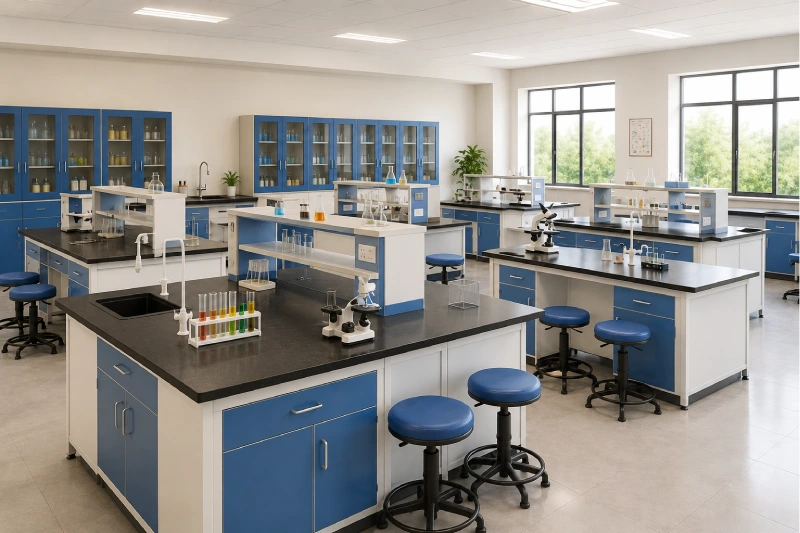
A science lab is only as safe and functional as the furniture it’s built around. Choosing the wrong workbench material or layout for a chemistry lab can mean chemical damage, safety hazards, and expensive early replacement — while getting it right means decades of safe, functional use across physics, chemistry, and biology instruction. Here’s what schools and colleges actually need to evaluate before setting up or upgrading a lab.
What Is Lab Furniture?
Lab furniture refers to the specialized workbenches, storage systems, and fixtures designed specifically for science laboratory use — built to withstand chemical exposure, heat, and heavy daily use in ways standard classroom furniture simply isn’t engineered to handle. Unlike ordinary furniture, which is designed primarily for aesthetics and comfort, lab furniture is engineered with industrial-grade materials specifically to resist chemical corrosion, extreme heat, and the rigorous daily demands of practical science education.
Why Chemistry, Biology, and Physics Labs Need Different Furniture
Not every science lab has the same furniture requirements, and treating them identically is one of the most common procurement mistakes. Chemistry and biology labs deal with corrosive chemicals and require chemical-resistant, often fireproof workbench setups, along with reagent racks to store glassware and chemicals safely away from the main working surface — reducing the risk of accidental spillage and breakage. Physics labs, by contrast, require a more sturdy, scratch-resistant setup along with raceways for power sockets needed across various electrical and mechanical experiments, rather than the chemical resistance that dominates chemistry lab requirements.
Choosing the Right Lab Workbench Material
The work surface is the single most important protection point on any lab bench — it’s the first line of defense against chemical spills, high heat, and daily wear, and choosing a material that doesn’t match your lab’s actual usage is a genuine safety risk, not just a durability concern.
| Material | Chemical Resistance | Best For | Relative Cost |
| Epoxy Resin | Excellent — resists most common lab reagents, heat, and stains | Chemistry, biology, pathology labs with heavy chemical exposure | Higher |
| Phenolic Resin | Very good — highly scratch-resistant, cuts well for modifications | Chemistry, general science labs needing durability at lower cost than epoxy | Moderate |
| Compact Laminate (HPL) | Moderate — durable but limited resistance to aggressive chemicals | School science labs, physics/biology with lighter chemical use | Lower |
| Stainless Steel | Good — strong, hygienic, doesn’t stain easily | Biology labs, dissection areas, general durability-focused setups | Moderate–Higher |
| Polypropylene (PP) | Excellent against strong acids/alkalis | Labs handling highly corrosive chemicals or fumes | Moderate |
For labs handling frequent, harsh chemical exposure — advanced chemistry and research-oriented college labs in particular — epoxy resin remains the benchmark choice due to its broad chemical resistance and heat tolerance. For standard school science labs where chemical exposure is more moderate and budget matters more, phenolic resin or compact laminate typically offer the better balance of durability and cost.
Core Components of a Well-Equipped Science Lab
- Workbenches/Lab Tables — the primary work surface, chosen by material based on the specific subject and chemical exposure level
- Reagent Racks & Storage Shelving — keeps glassware and chemicals off the main work surface, reducing spillage and breakage risk
- Fume Hoods (where applicable) — essential for labs handling volatile or hazardous chemical reactions
- Sinks & Water Points — integrated into chemistry and biology lab benches for immediate cleanup and safety response
- Storage Cabinets — secure storage for chemicals, equipment, and glassware, often requiring lockable, chemical-resistant construction
- Stools & Seating — durable, easy-to-clean seating suited to standing/sitting lab work rather than standard classroom chairs
Key Considerations Before Setting Up a Lab
1. Match the Workbench Material to Actual Lab Usage
The single biggest planning mistake is choosing a workbench material based on cost or appearance alone rather than the specific chemicals and processes the lab will actually handle daily — a chemistry lab performing acid-based experiments needs materially different resistance than a biology lab focused on dissection and observation work.
2. Plan for Age-Appropriate Bench Height
Just as with classroom furniture, lab bench height should be predefined based on the age group using the space — school-level lab furniture height requirements differ from college-level setups, and mismatched heights create both ergonomic strain and safety risk during experiments involving heat or sharp instruments.
3. Separate Storage from Work Surface
Integrating dedicated reagent racks and storage shelving into the lab layout, rather than relying on the workbench itself for chemical and glassware storage, is a straightforward way to reduce accidental spillage and breakage during active experiment sessions.
4. Budget for Subject-Specific Setup, Not a Single Generic Lab
Chemistry, physics, and biology labs each have distinct furniture and fixture requirements — treating “lab furniture” as a single undifferentiated line item in a budget often results in a chemistry lab under-equipped for chemical safety or a physics lab lacking adequate power access.
5. Request a Live Demo Before Committing
Lab furniture is a long-term institutional investment, and a live, on-site demonstration of workbench materials and layout options allows science faculty to evaluate real-world fit before a bulk order is placed — catching mismatches that specification sheets alone can’t reveal.
Frequently Asked Questions
1] What is the best material for a chemistry lab workbench?
Ans: Epoxy resin is generally considered the strongest choice for chemistry labs with frequent, harsh chemical exposure, offering excellent resistance to chemicals, heat, and staining, while phenolic resin offers a more cost-effective alternative with very good chemical resistance for standard educational lab use.
2] Do physics labs need the same furniture as chemistry labs?
Ans: No, physics labs generally require a sturdier, more scratch-resistant workbench setup along with power raceways for electrical experiments, rather than the chemical-resistant, fireproof setup prioritized in chemistry and biology labs.
3] Why do lab benches need separate reagent racks?
Ans: Reagent racks keep glassware and chemicals off the main working surface, which frees up workspace and significantly reduces the risk of accidental spillage or breakage during active experiments.
4] Is compact laminate a good choice for school science labs?
Ans: Yes, for school labs with moderate, non-aggressive chemical use, compact laminate (HPL) offers durable, cost-effective performance, though it has more limited resistance to high temperatures and harsh chemicals compared to epoxy or phenolic resin.
5] Should lab furniture height vary by student age group?
Ans: Yes, lab bench height should be planned according to the age group using the space, similar to classroom furniture standards, since mismatched heights create both ergonomic discomfort and safety risks, particularly in experiments involving heat sources or sharp instruments.
Final Word
Lab furniture decisions carry higher stakes than standard classroom furniture — the wrong workbench material can mean chemical damage, safety hazards, and costly early replacement, while the right setup, matched to the specific subject and usage level, delivers decades of safe, functional use. Planning by subject (chemistry, physics, biology), matching workbench material to actual chemical exposure, and requesting a live demo before committing to a bulk order are the steps that separate a lab that serves an institution well from one that needs early rework.
Vardhaman Trading Company designs and supplies chemistry, physics, and biology lab furniture for Pune schools and colleges, with chemical-resistant workbench options and turnkey installation. Explore our Lab Furniture range or get in touch to plan your lab setup requirement.