
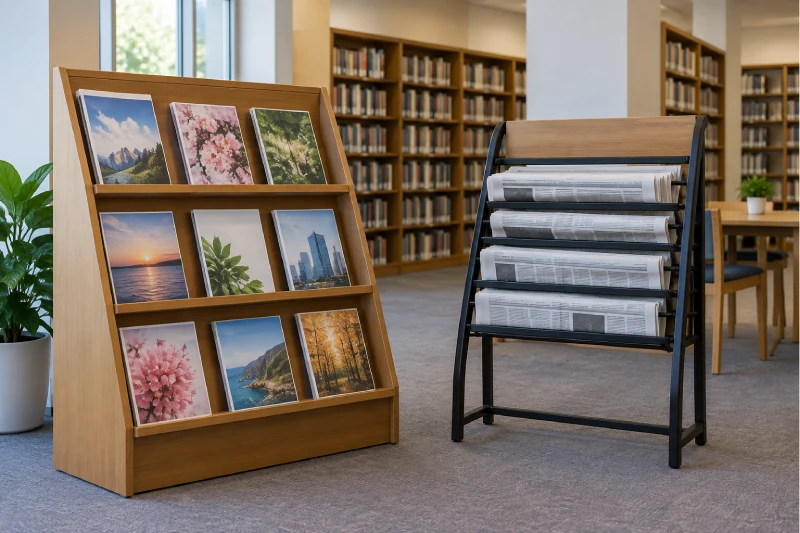
A modern library is designed not only to store books but also to create an organized, comfortable, and engaging environment where students, teachers, researchers, and visitors can access information easily. While bookshelves, study tables, chairs, and storage units form the foundation of a library, dedicated solutions for newspapers, magazines, journals, and periodicals are equally important.
This is where magazine and newspaper stands for libraries become valuable. Designed to provide organized access to frequently read publications, these stands help libraries maintain a neat appearance while making newspapers and magazines easier for users to browse, read, and return.
In school and college libraries, where multiple students may use the same publications throughout the day, a dedicated periodical stand can significantly improve organization and usability. Instead of newspapers being left across tables or magazines being stacked randomly, every publication can have a designated and accessible space.
Why Libraries Need Dedicated Magazine & Newspaper Stands
Newspapers and magazines are different from books because they are generally intended for frequent browsing and short-duration reading. A student may want to quickly check the day’s newspaper, while another may be interested in a monthly educational magazine or current-affairs publication.
Keeping these materials inside conventional bookshelves may make them difficult to locate and access. A dedicated stand provides a visible display area where users can immediately identify available publications.
For librarians, this also simplifies daily organization. Newspapers and magazines can be arranged systematically, making it easier to remove outdated issues, replace current editions, and maintain the reading area throughout the day.
Creating an Organized Library Reading Corner
A well-planned library reading corner can encourage students to spend more time reading beyond their academic textbooks. Newspapers, magazines, journals, and educational periodicals can provide exposure to current affairs, general knowledge, technology, science, culture, business, and other subjects.
Placing a magazine and newspaper stand close to a designated reading area creates a functional information zone. Students can select a publication, move to a nearby reading table, and return it to the appropriate section after use.
This simple arrangement helps create a more structured reading experience and prevents frequently used publications from occupying valuable table space.
Improving Accessibility for Students and Faculty
Accessibility is one of the most important considerations when planning educational furniture. Publications that are difficult to find or reach may not receive the attention they deserve.
Magazine and newspaper stands allow frequently accessed material to remain visible and within convenient reach. Instead of asking the librarian where a particular newspaper or magazine is kept, students can browse the display themselves.
For faculty members and researchers, this can also make it easier to identify journals, professional magazines, newsletters, and other publications available in the library.
Reducing Clutter and Maintaining Cleanliness
One of the common challenges in busy libraries is maintaining order throughout the day. Newspapers may be left folded on study tables, magazines can become mixed together, and older issues may accumulate in different areas.
A dedicated periodical stand provides a defined location for these materials. When each publication has its own place, users are more likely to return it correctly after reading.
This contributes to a cleaner and more professional library environment while reducing the workload involved in repeatedly reorganizing reading materials.
Magazine Stands vs. Conventional Storage
Conventional storage is useful for books and archival material, but frequently accessed periodicals often benefit from open display.
A magazine stand allows users to see publication covers or titles at a glance. This encourages browsing and makes it easier to identify the required issue without pulling multiple items from a shelf.
The difference is particularly important in school libraries. Students often make spontaneous choices based on what catches their attention. An attractive and organized display can therefore encourage them to explore publications they may not have actively searched for.
Complementing Brochure Racks and Display Shelf Trays
Libraries frequently display more than newspapers and magazines. Schools and colleges may also need to present admission information, educational brochures, event announcements, newsletters, career information, institutional publications, or awareness material.
A brochure rack can be used alongside a periodical stand to organize such informational resources. Similarly, display shelf trays can provide additional flexibility for presenting smaller publications and frequently accessed reading material.
Together, these solutions can create a dedicated information and reading zone without overcrowding the main book storage area.
Supporting Campus Library Organization
Effective campus library organization is not limited to arranging books alphabetically. It involves creating clearly defined zones for different activities and resources.
A library may include separate areas for:
- Book collections and reference materials
- Newspapers and magazines
- Journals and periodicals
- Reading and study
- Digital learning
- New arrivals and featured publications
- Notices and institutional information
Magazine and newspaper stands can help establish a clear periodical section within this overall layout. When different resources have designated locations, students can navigate the library more independently.
A Useful Addition to School and College Libraries
For schools, a newspaper stand can provide students with easy access to daily news and current affairs. Regular newspaper reading can complement classroom learning by exposing students to events and developments beyond their textbooks.
In colleges and universities, the requirement may be broader. Students may use business magazines, research publications, industry journals, career newsletters, newspapers, and subject-specific periodicals.
A well-planned display system allows institutions to accommodate these different requirements while maintaining an organized environment.
Important Factors When Choosing a Library Periodical Stand
Before purchasing a magazine or newspaper stand, educational institutions should consider several practical factors.
Durability
Library furniture experiences regular use. The stand should therefore be sturdy enough to handle repeated daily interaction by students and staff.
Capacity
Institutions should evaluate how many newspapers, magazines, or periodicals they need to display. A suitable capacity prevents overcrowding while ensuring that commonly used publications remain accessible.
Space Utilization
Libraries often need to accommodate large collections within limited floor areas. Compact furniture solutions can help institutions make efficient use of available space without obstructing walkways.
Easy Maintenance
Since newspapers and magazines are handled frequently, the stand should be easy to clean and maintain. A practical design can help libraries keep the display area presentable throughout the day.
User Accessibility
Publications should be positioned so that students and faculty can browse and remove them comfortably. Good accessibility improves the overall usefulness of the display.
Enhancing the Appearance of Modern Libraries
Library furniture also contributes to the visual character of an educational institution. A cluttered periodical section can make an otherwise well-designed library appear disorganized.
On the other hand, neatly arranged magazine and newspaper stands can create a structured and professional appearance. Publications can be categorized or arranged systematically, making the area visually easier to understand.
For institutions developing modern learning environments, such details can contribute to a library that feels welcoming, functional, and student-friendly.
Why Invest in Purpose-Built Library Furniture?
Purpose-built furniture is designed around the way a particular resource is used. Books require shelves, students need ergonomic study furniture, and newspapers and magazines benefit from accessible display systems.
Using appropriate furniture for each requirement allows libraries to create more efficient layouts. It also reduces the tendency to improvise with tables, cabinets, or unsuitable storage units.
For schools and colleges undertaking library renovations, magazine and newspaper stands can therefore be considered an important part of the overall furniture planning process rather than an optional accessory.
Magazine & Newspaper Stands from Vardhaman Trading
Vardhaman Trading provides institutional furniture solutions for educational environments, including schools, colleges, and other learning spaces. Its range includes Magazine & Newspaper Stands designed to support organized display and access to frequently used reading materials.
For institutions planning a new library, upgrading an existing reading room, or improving their campus library organization, selecting the right furniture can make everyday operations more convenient for both students and librarians.
A dedicated periodical display solution helps keep newspapers and magazines organized, reduces clutter, improves accessibility, and creates a more structured reading environment.
Build a Better Organized Reading Environment
A successful library is one where students can easily find what they need and feel encouraged to explore more. From bookshelves and study furniture to magazine stands and information displays, every element plays a role in creating that experience.
Investing in magazine and newspaper stands for libraries is a practical way to organize frequently accessed publications while improving the functionality and appearance of reading spaces.
For schools, colleges, universities, and institutional libraries, the right combination of periodical stands, brochure racks, display solutions, and library furniture can transform an ordinary reading area into a more organized, accessible, and engaging learning environment.